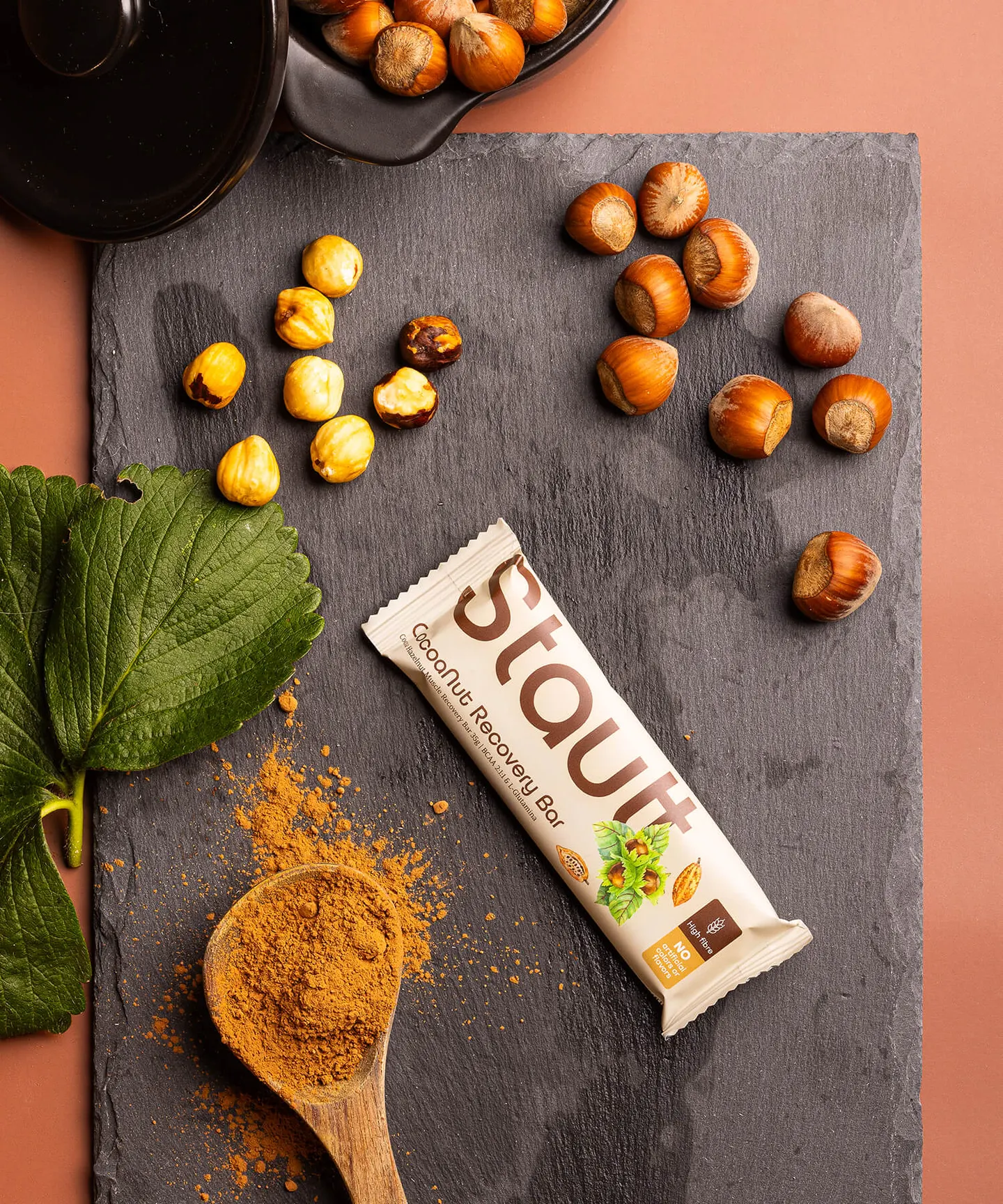
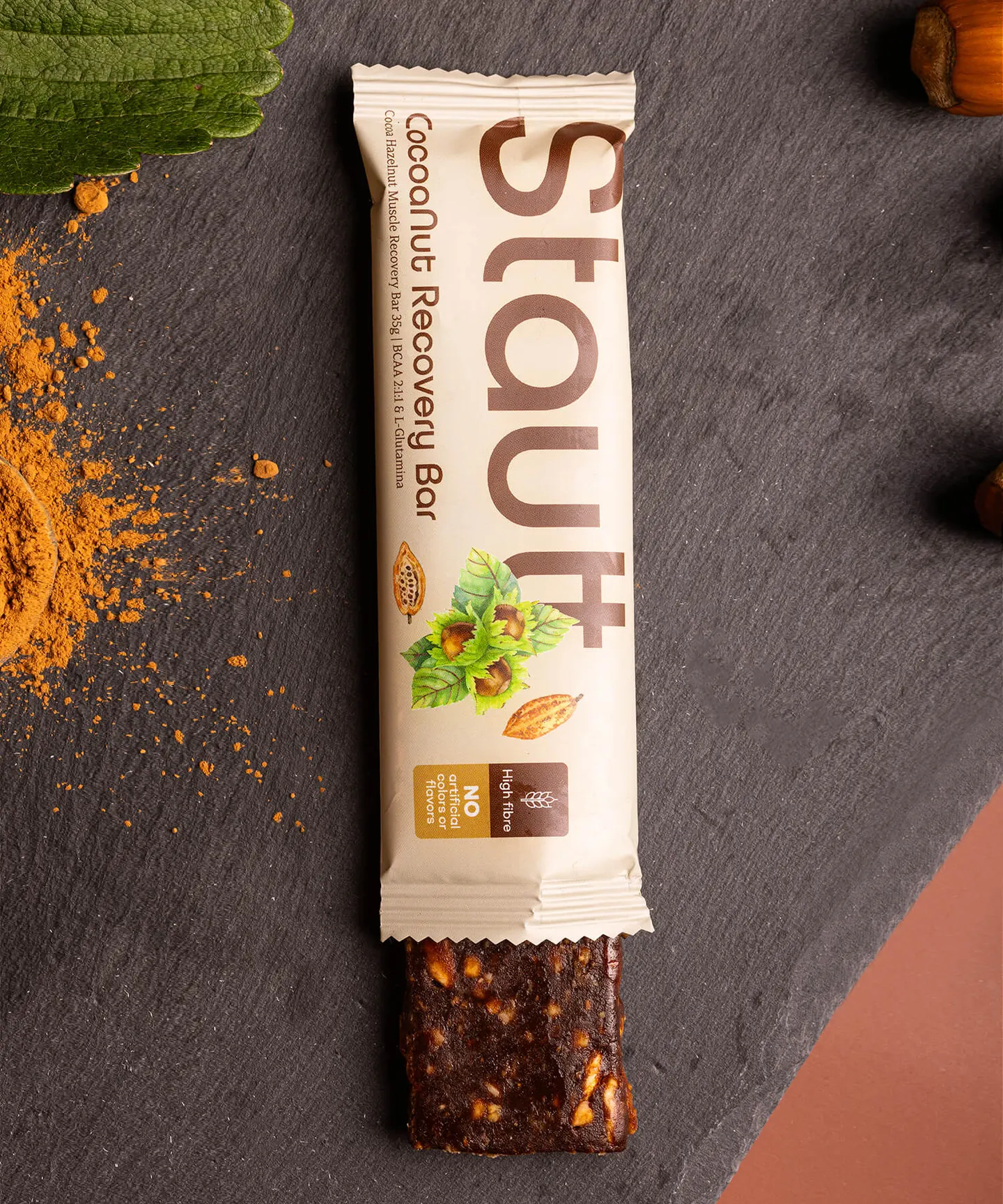
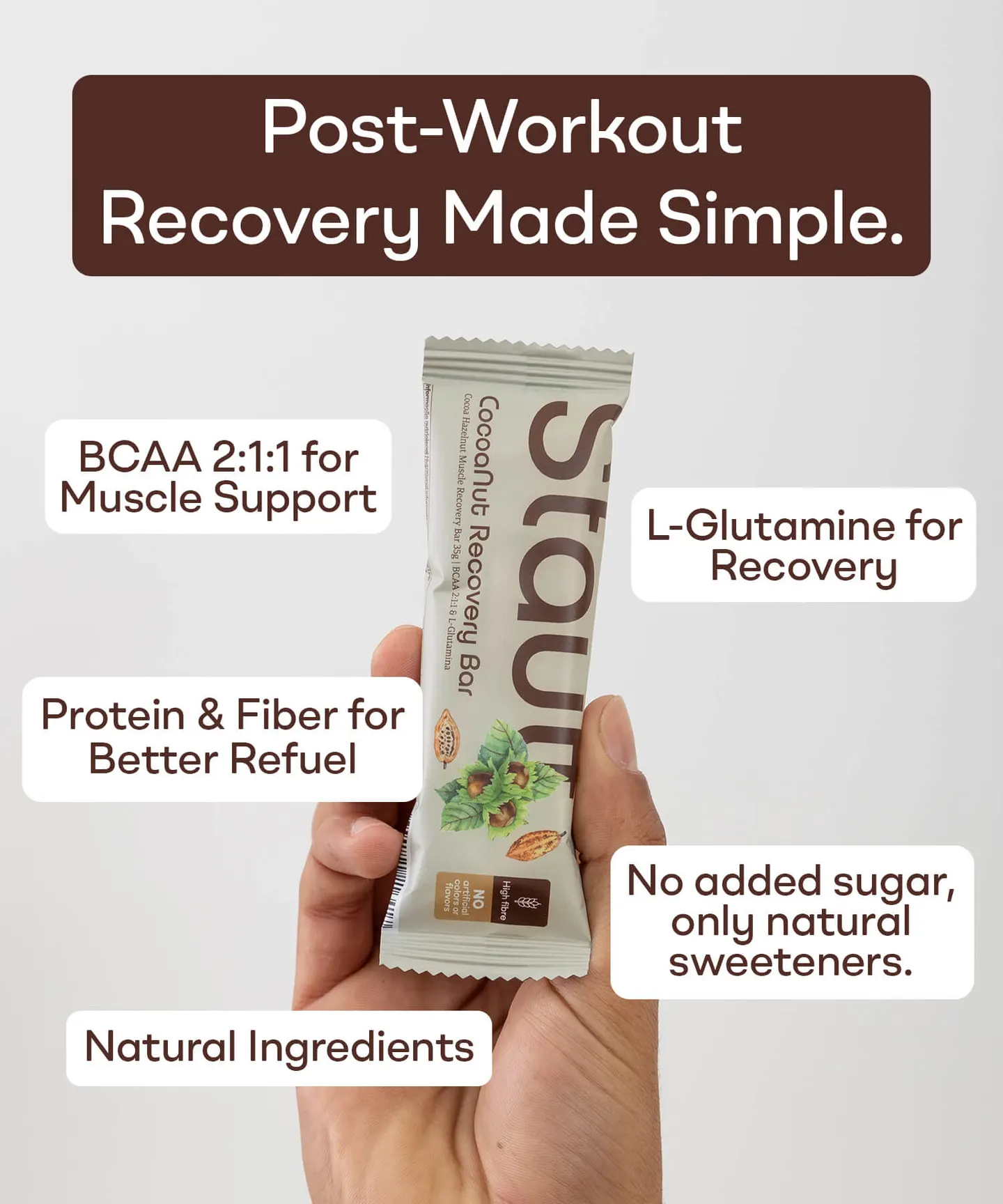
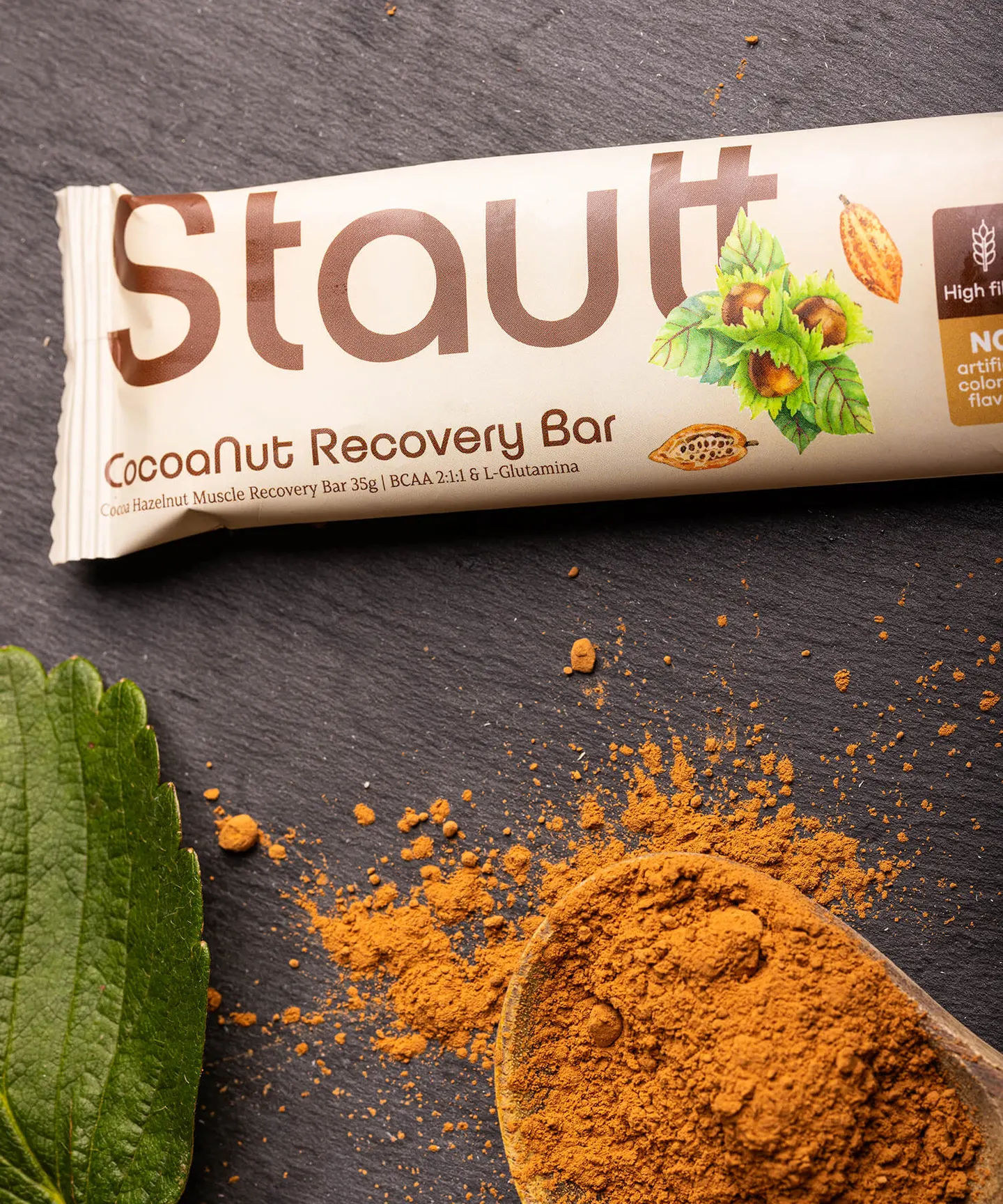
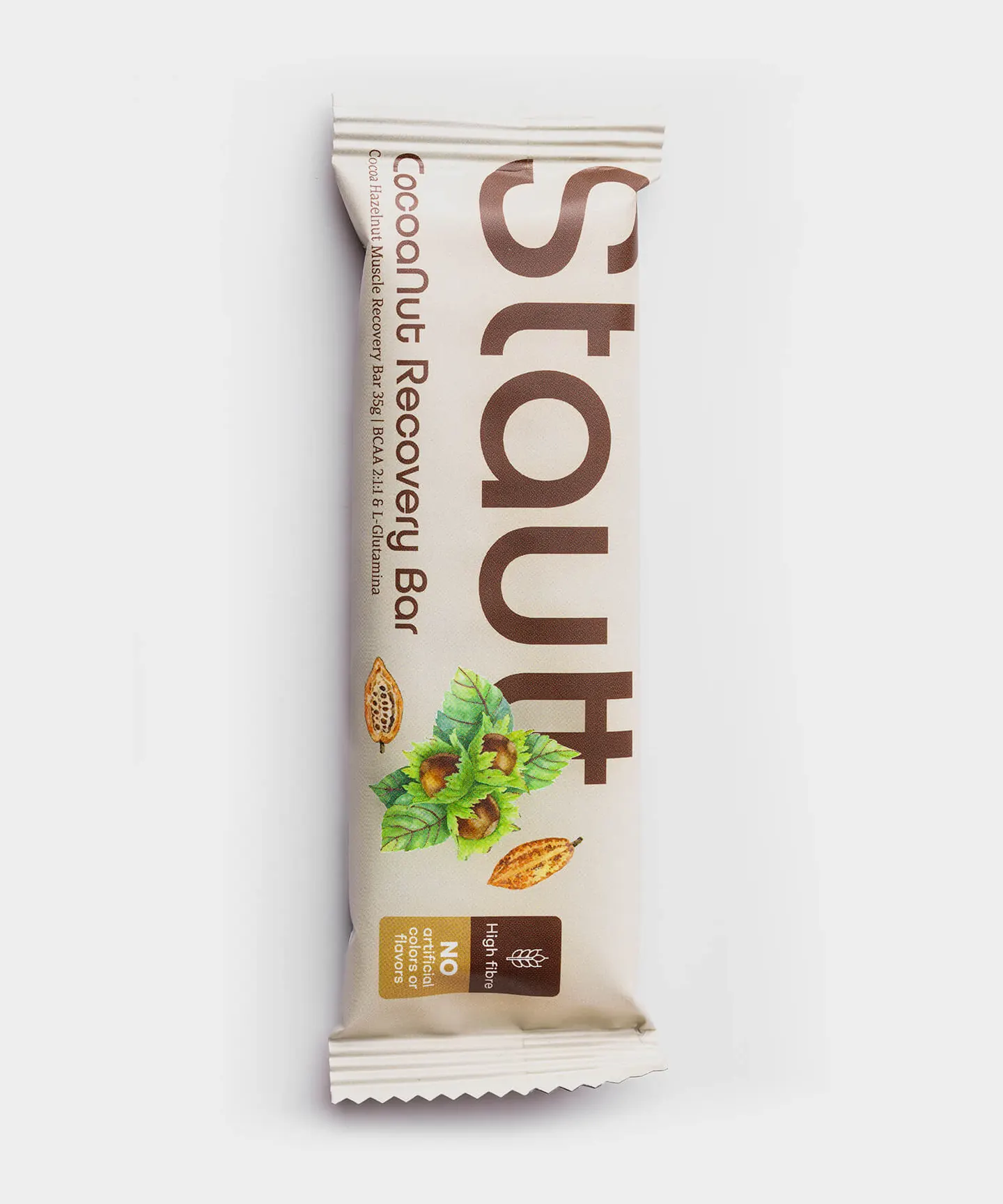
BCAA and glutamine: why this muscle recovery bar works
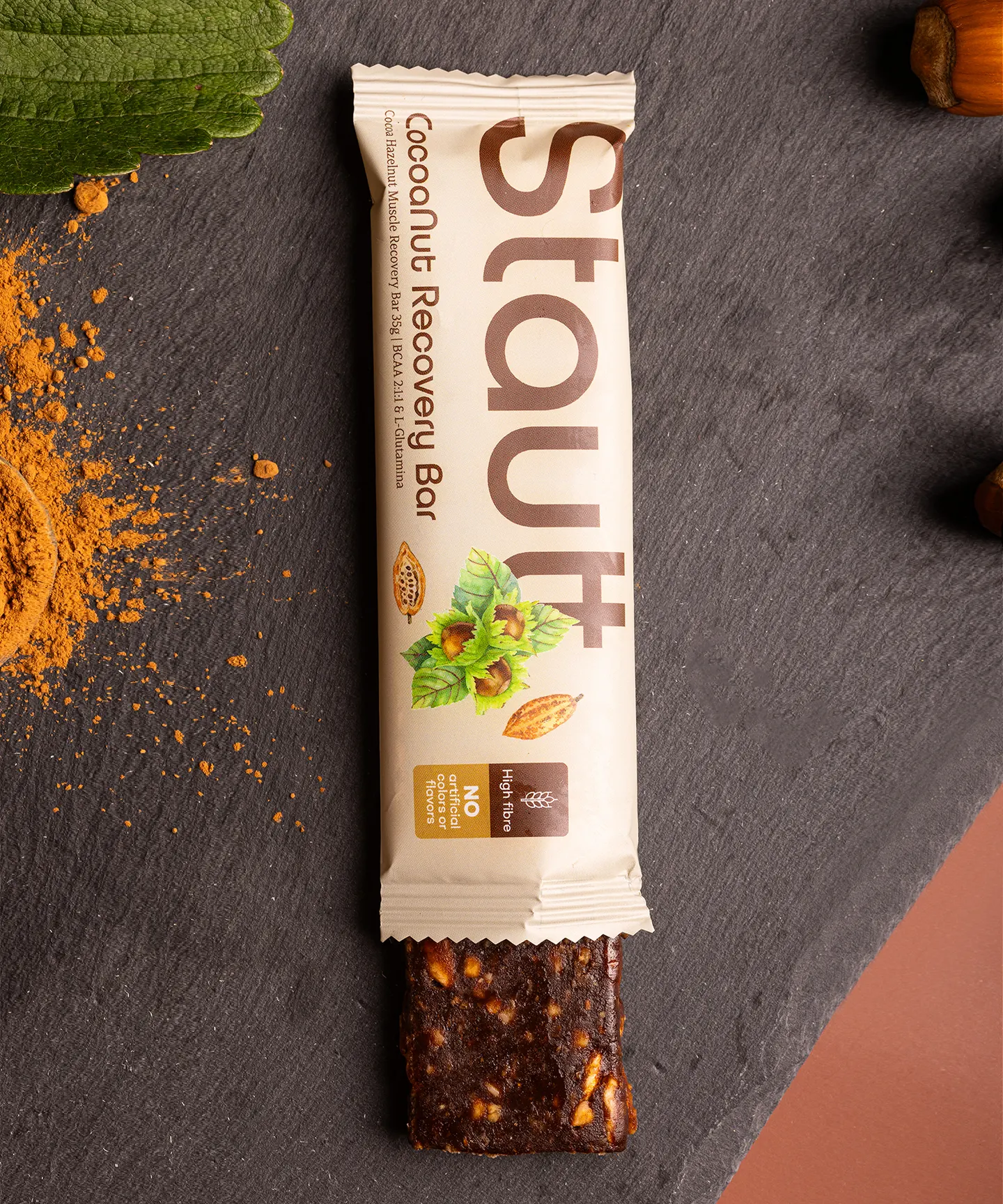
BCAA, or branched-chain amino acids, are three essential amino acids: L-Leucine, L-Isoleucine and L-Valine, in a 2:1:1 ratio. They are “essential” because the body does not produce them and must get them from food. They are the most abundant amino acids in muscle and the first to be used as fuel during intense exercise.
L-Leucine is the most important amino acid for muscle protein synthesis. It activates the mTOR pathway, the main signal that triggers muscle fibre repair after training. L-Isoleucine and L-Valine complement this effect with energy during effort and less fatigue.
L-Glutamine is the most abundant amino acid in blood and muscle. Intense training lowers its levels, which slows recovery. That is why glutamine supports your post-workout, helps reduce muscle soreness and restores glycogen for the next session.
A muscle recovery bar works best as part of a balanced diet, as the World Health Organization recommends.
BCAA 2:1:1: the right ratio
The 2:1:1 ratio (leucine, isoleucine, valine) is the most studied and used for muscle recovery and protein synthesis after effort.
500mg of BCAA per bar
A dose of BCAA in a natural and portable format, no powders, no shakers, no complexity.
500mg of L-Glutamine per bar
Glutamine drops after intense training. Supplementation supports recovery, reduces muscle soreness and supports the immune system.
Post-workout energy from dates
Dates provide fast-absorbing glucose to replenish the muscle glycogen used during effort.